Brooklyn’s architectural landscape is a living archive of New York City’s growth, but few styles capture the borough’s ambition and artistic confidence quite like Renaissance Revival. Emerging in the late 19th and early 20th centuries, this architectural movement brought a sense of European grandeur to Brooklyn’s rapidly expanding residential neighborhoods.
Today, Renaissance Revival homes remain some of the borough’s most admired, prized both for their craftsmanship and their place in the narrative of Brooklyn’s urban development. Continue along as we unpack the historical significance and enduring legacy of these homes.
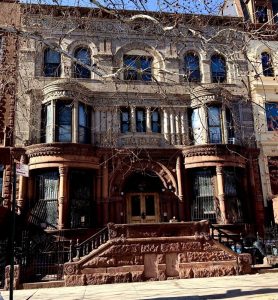
Also known as Neo-Renaissance, this movement draws heavily from 15th and 16th-century Italian palazzos. In Brooklyn, this style is indicated by symmetrical facades, rusticated stone and brick bases, and arched or pedimented doorways. Brooklyn’s Renaissance Revival homes typically express restraint, unlike florid French Renaissance, or Beaux-Arts style. They rely on subtle detailing, and disciplined geometry, offering a refined contrast to contemporaneous Romanesque Revival or Queen Anne rowhouses.
Why the Style Flourished in Brooklyn
By the 1890s, Brooklyn’s population was booming, and developers raced to create housing that signaled prosperity and cultural sophistication. The Renaissance Revival aesthetic—rooted in classical ideals of harmony, balance, and permanence—was a perfect match for this moment.
Many neighborhoods in Central Brooklyn, including Lefferts Gardens, Park Slope, and Bay Ridge, became canvases for architects eager to elevate the status of Brooklyn’s rowhouse blocks. Builders used high-quality brownstone, limestone, and occasionally glazed brick to give these structures an air of longevity.
Renaissance Revival in Rowhouse Form
One of the most interesting aspects of Brooklyn’s Renaissance Revival wave is how adaptable the style became. While Italian palazzos inspired the movement, space constraints on Brooklyn’s narrow residential lots required creativity. The result was a distinctly American interpretation:
• Stoops framed by pilasters or classical columns
• Tripartite façades that mimic palazzo floors
• Second-floor piano nobile windows—taller and more decorative
• Elaborate entry surrounds featuring cartouches, wreaths, or swags
These details allowed developers to market homes as sophisticated and modern, appealing to Brooklyn’s growing middle and upper-middle classes.
Preservation and Modern Appeal
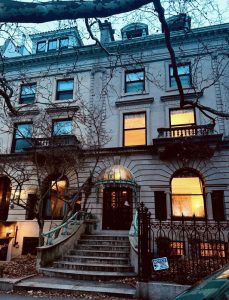
Today, Renaissance Revival properties are among the most sought-after in Brooklyn’s historic districts. Their craftsmanship—evident in carved limestone, original leaded-glass transoms, and hand-tooled masonry—has proved remarkably resilient.
Homebuyers and preservationists praise the style for several reasons:
• Timeless curb appeal: The symmetry and classical ornamentation remain universally admired.
• Structural solidity: Quality materials and construction techniques have helped many homes retain their integrity.
• Design versatility: Interiors often feature high ceilings, oversized windows, and flexible floor plans that transition well to contemporary lifestyles.
In many cases, restored Renaissance Revival rowhouses become showcases for blending period detail with modern amenities, achieving a balance that feels both historic and livable.
A Lasting Architectural Signature
Renaissance Revivalhomes are more than decorative remnants—they’re a testament to Brooklyn’s aspirations during a pivotal era. They represent a moment when the borough sought not just to grow, but to express cultural identity through architecture.
Whether you’re walking along the tree-lined blocks of St. Marks Avenue, admiring limestone rows in Prospect Heights, or exploring the historic districts around Brooklyn Heights, the influence of Renaissance Revival architecture is unmistakable. Its enduring grace continues to shape the visual and historical character of Brooklyn, reminding us that good design doesn’t simply fill space—it elevates it.
If you are looking for advice in any part of evaluating a fixer upper, please feel free to contact me for resources and assistance at townhousetherapytati@gmail.com or call (917) 697-0117.