Among Brooklyn’s 19th-century architectural styles, Second Empire stands apart for its distinctive rooflines and unmistakable silhouette. Introduced in the United States during the mid-19th century and popularized after the Civil War, the style brought a touch of Parisian urbanism to Brooklyn’s developing neighborhoods. Though less common than Italianate or later revival styles, Second Empire homes remain some of the borough’s most recognizable historic residences.
Defined by their mansard roofs and vertical emphasis, these buildings reflect a moment when Brooklyn’s architecture looked outward—particularly to France—for inspiration.
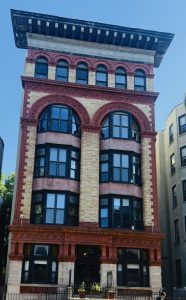
What Defines Second Empire Architecture?
Second Empire architecture takes its name from the reign of Napoleon III in France (1852–1870), when the style was widely used in Parisian redevelopment. Its most defining feature is the mansard roof, which allows for a full additional story beneath a steep, dual-pitched roofline.
In Brooklyn, common characteristics include:
- Mansard roofs, often clad in slate or metal
- Dormer windows projecting from the roofline
- Bracketed cornices and decorative roof detailing
- Symmetrical façades with strong vertical proportions
- Tall windows, sometimes with arched or molded surrounds
- Stone or brownstone façades, frequently with stoops
The mansard roof not only defines the aesthetic but also increases usable interior space—an important advantage in dense urban settings.
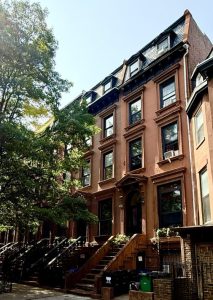
Why the Style Appeared in Brooklyn
Second Empire architecture gained popularity in the United States between the 1860s and 1880s, following the Civil War. In Brooklyn, it arrived during a period of rapid expansion, when developers and architects were experimenting with new styles that conveyed sophistication and modernity.
The style’s French associations made it particularly appealing for institutional buildings and high-style residences. At the same time, its practical benefits—especially the ability to add a full upper floor within the roof—made it well-suited to urban housing.
As tastes shifted toward Romanesque Revival and later Victorian styles, Second Empire fell out of favor, leaving behind a relatively small but visually distinctive group of buildings.
Where Second Empire Homes Can Be Found in Brooklyn
While not as widespread as Italianate architecture, Second Empire buildings can still be found across several Brooklyn neighborhoods:
- Clinton Hill — Known for architectural variety, Clinton Hill includes notable Second Empire residences, often featuring prominent mansard roofs and elaborate detailing.
- Fort Greene — The neighborhood’s mix of mid- to late-19th-century buildings includes select Second Empire examples, particularly among larger residences.
- Park Slope — Though dominated by other styles, Park Slope contains isolated Second Empire rowhouses and institutional buildings.
- Brooklyn Heights — Some early high-style homes and converted structures reflect Second Empire influence, especially in rooflines and dormer configurations.
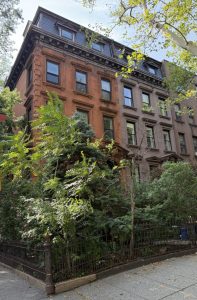
Interior Characteristics
Interiors of Second Empire homes often reflect their distinctive roof structure. Typical features may include:
- Full upper floors tucked beneath mansard roofs
- Sloped ceilings or dormer-lit rooms on top levels
- High ceilings on primary floors
- Decorative plasterwork and period millwork
- Formal room arrangements similar to Italianate layouts
The additional upper level created by the mansard roof often results in more flexible living space compared to earlier styles.
A Distinctive Architectural Moment
Second Empire homes represent a brief but influential chapter in Brooklyn’s architectural history. Their Parisian inspiration, combined with practical design advantages, made them a compelling choice during a period of experimentation and growth.
Today, their rarity and unmistakable rooflines make them easy to identify and highly valued as part of Brooklyn’s diverse architectural fabric. They stand as a reminder of a time when the borough’s design influences extended well beyond its own streets—reaching across the Atlantic for inspiration.
If you are looking for advice in any part of evaluating a fixer upper, please feel free to contact me for resources and assistance at townhousetherapytati@gmail.com or call (917) 697-0117.